- English
- Español
- Português
- русский
- Français
- 日本語
- Deutsch
- tiếng Việt
- Italiano
- Nederlands
- ภาษาไทย
- Polski
- 한국어
- Svenska
- magyar
- Malay
- বাংলা ভাষার
- Dansk
- Suomi
- हिन्दी
- Pilipino
- Türkçe
- Gaeilge
- العربية
- Indonesia
- Norsk
- تمل
- český
- ελληνικά
- український
- Javanese
- فارسی
- தமிழ்
- తెలుగు
- नेपाली
- Burmese
- български
- ລາວ
- Latine
- Қазақша
- Euskal
- Azərbaycan
- Slovenský jazyk
- Македонски
- Lietuvos
- Eesti Keel
- Română
- Slovenski
- मराठी
- Srpski језик

Which Rigid Packaging Fits Your Brand Better?
Many brand buyers struggle to choose between top and bottom boxes and hinged book-style boxes for their product packaging. This comparison shares real factory data on production cost, lead time and logistics performance to help brands pick the more cost-effective packaging solution.
Top and bottom box and book-style hinged boxes are two mainstream rigid packaging styles, with key differences listed as follows:
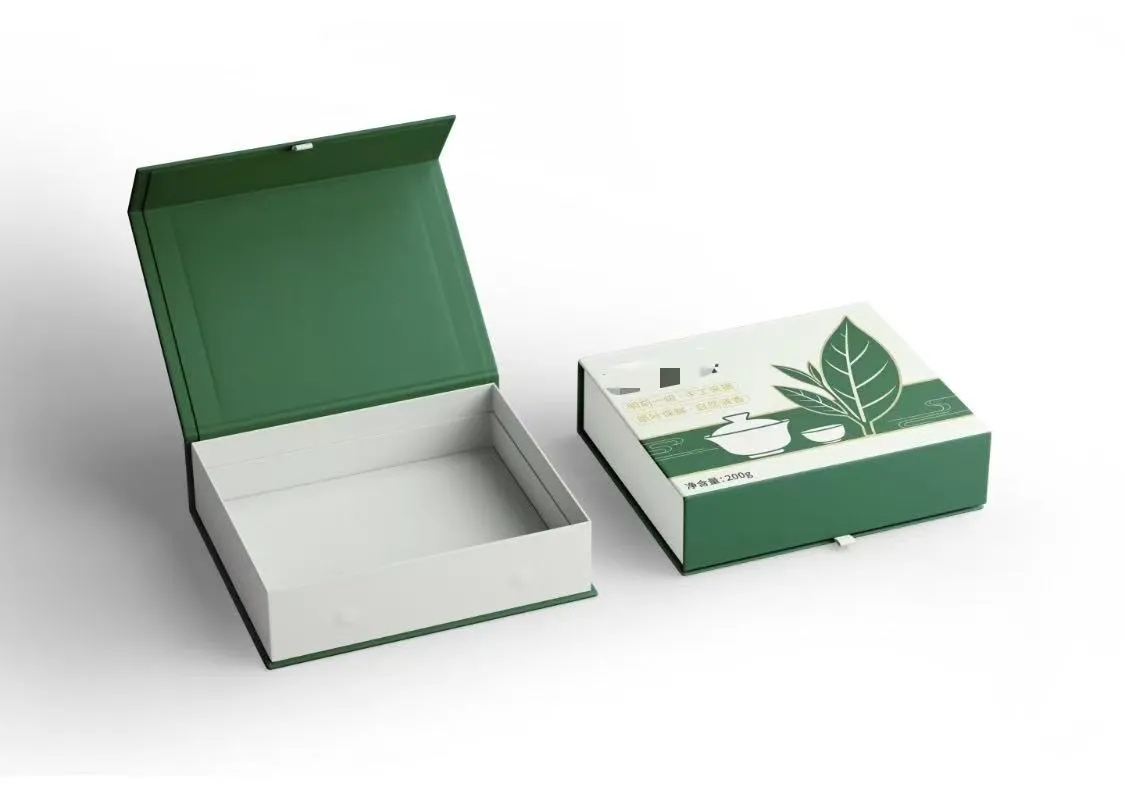
Structure: top and bottom boxes feature a fully split nested structure, the lid and base are totally separate pieces. Book-style boxes are connected as one hinged unit, just like a hardcover book. Based on our factory data, same-size boxes need 2 grey board blanks for lift-off lids, but 3 blanks plus hinge bonding for book-style boxes.
Opening way: top and bottom box stay closed by precise size matching only. Book boxes use hidden magnets or paper clasps to fasten the lid.
Production and logistics: Top and bottom box have shorter lead time and lower MOQ of 500pcs, they can stack 8 layers in shipping cartons with only 0.7% deformation rate. Hinged book boxes require MOQ 1000pcs, only stack 5 layers safely, and have higher risk of loose hinges during long transport.
Usage and cost: Top and bottom box have lower unit cost, covering nearly 68% of our rigid box orders for jewelry and small accessories. Book-style boxes create a premium unboxing experience, widely used for gift sets, making up the remaining 32% of orders.