- English
- Español
- Português
- русский
- Français
- 日本語
- Deutsch
- tiếng Việt
- Italiano
- Nederlands
- ภาษาไทย
- Polski
- 한국어
- Svenska
- magyar
- Malay
- বাংলা ভাষার
- Dansk
- Suomi
- हिन्दी
- Pilipino
- Türkçe
- Gaeilge
- العربية
- Indonesia
- Norsk
- تمل
- český
- ελληνικά
- український
- Javanese
- فارسی
- தமிழ்
- తెలుగు
- नेपाली
- Burmese
- български
- ລາວ
- Latine
- Қазақша
- Euskal
- Azərbaycan
- Slovenský jazyk
- Македонски
- Lietuvos
- Eesti Keel
- Română
- Slovenski
- मराठी
- Srpski језик

From Heavy to Light: A Practical Guide to Wine Box Packaging
Once freed from the constraints of heavy glass and wooden crates, wine gains a new kind of liberty. For a long time, glass bottles and wooden cases were almost synonymous with quality wine. But today, a transformation led by paperboard box packaging is taking hold—not just for aesthetics, but to solve real, tangible problems.
If you are considering new possibilities for wine packaging, this guide may offer some useful reference points.
Why Paperboard Boxes? Three Compelling Reasons
1. Sustainability: The Significant Carbon-Reduction Potential of Lightweighting
The "weight" of glass bottles has always been an issue. It not only consumes substantial energy during production but also drives up transportation costs. According to a life cycle assessment of beverage packaging in Australia and New Zealand, paperboard boxes have one of the lowest carbon footprints among all common packaging formats. Some data even suggests that packaging accounts for nearly 70% of the wine industry's carbon footprint, and shifting to lightweight paperboard boxes can significantly reduce this proportion.
The lightweight advantage of paperboard boxes is particularly evident during transportation. For instance, a corrugated gift box designed to hold six bottles can weigh less than 800 grams, while a wooden gift box of the same capacity weighs up to 2.5 kilograms. For wines that need to travel long distances, the cost savings and carbon emission reductions from this weight difference are substantial.
2. Functionality and Innovation: The "Iron Shield" for the E-Commerce Era
As online wine purchasing becomes the norm, the protective function of packaging has become more important than ever. Traditional foam or plastic inserts are not only cumbersome to assemble but also less environmentally friendly. Innovative solutions are addressing this pain point. For example, integrated paperboard protective structures require no pre-assembly and can quickly secure wine bottles, effectively preventing damage during shipping while protecting labels and caps.
On the technological frontier, aseptic paperboard filling technology is rewriting the rules. With this technology, wine can maintain stable quality and flavor without added preservatives and without refrigeration. Compared to glass bottles of the same capacity, this type of paperboard box can be 17 times lighter and has a 12 times lower impact on climate change—an environmentally compelling proposition from production to consumption.
3. Brand Storytelling: A Storyboard Within a Small Space
Packaging is the first medium of communication between a brand and its consumers. Modern paperboard boxes offer generous printing surfaces, allowing brands to fully unleash their creativity. Whether using kraft paperboard made from 70% post-consumer recycled materials or high-precision color printing, brands can effectively convey their stories, tasting notes, and environmental philosophies, making it a key differentiator.
Comparison: Wine-Specific Paperboard Boxes vs. Ordinary Paperboard Boxes
There are many types of paperboard boxes on the market, but not all are suitable for wine. The table below outlines the core differences between the two:
| Dimension | Wine-Specific Paperboard Box | Ordinary Paperboard Box (e.g., Shoebox, Shipping Carton) |
|---|---|---|
| Core Purpose | Protection, preservation, brand presentation | Basic containment, external shipping protection |
| Structure & Strength | Uses specific flute types (e.g., BC flute, E flute) with compression resistance and stacking strength, suitable for warehousing and pallet transport | Simple structure with limited load-bearing capacity; lacks reinforcement design for liquid containers |
| Internal Protection | Comes standard with molded pulp inserts, integrated dividers, or neck-fixing slots to prevent bottle contact and label abrasion | Usually no inserts, or only loose fillers like shredded paper or bubble wrap |
| Moisture & Barrier Properties | Features food-grade moisture-resistant coatings or composite barrier materials to prevent leakage and external humidity ingress | No moisture protection; softens and collapses when exposed to dampness |
| Printing & Surface Finishing | Supports high-precision color printing, foil stamping, spot UV, and other processes; serves directly as a brand display platform | Mostly mono-color printing or simple labeling; focuses on informational identification rather than brand tonality |
| Applicable Scenarios | Retail display, e-commerce shipping, gift-giving for wine | Warehousing and transport of general merchandise, ordinary parcel shipping |
How to Choose the Right Paperboard Box for Your Wine?
Choosing packaging isn't just about looks. The following steps may help you make a more informed decision.
Step 1: Clarify Your Needs—Is It for Gifting, Retail, or Shipping?
- Premium Gifting Scenarios: Consider rigid gift boxes. Made of chipboard with thicknesses ranging from 1.5mm to 3mm, these boxes offer superior protection and a luxurious unboxing experience, often equipped with magnetic closures, ribbons, or foam inserts.
- E-Commerce Retail Scenarios: Corrugated boxes are the mainstream choice that balances protection and cost. Single-wall corrugated board (3-4mm thick) is suitable for lightweight bottles and short-distance transport, while double-wall corrugated board (6-7mm thick) provides greater protection for premium wines or international shipments. Additionally, specially designed single-bottle shipping boxes with built-in foam sleeves are lightweight and can fit through standard mail slots, making them a popular option.
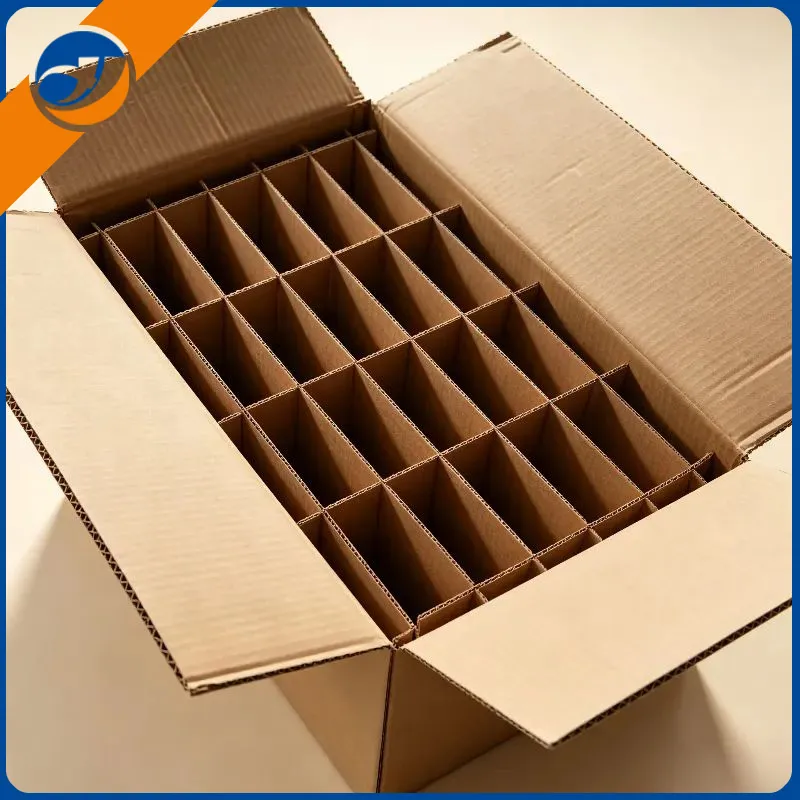
- Multi-Bottle Combination Scenarios: For 6-bottle or 12-bottle packs, the classic divider box is worth considering. Some innovative designs feature integrated forming and auto-lock bottoms that can be assembled quickly without tape, while the built-in dividers effectively prevent bottle-to-bottle contact and protect labels. If you are pursuing extreme lightweighting and export convenience, aseptic paperboard packaging is worth close attention—it is almost the ultimate form of single-serve wine.
Step 2: Pay Attention to Technical Details—It's Not Just About the Board
-
Board Structure: The "flute type" of corrugated board is critical. For example, BC flute offers excellent stacking strength, suitable for warehousing and pallet transport, while E flute is thinner and flatter, capable of delivering high-precision printing, making it ideal for retail packaging.
-
Internal Inserts: Beyond paperboard dividers, molded pulp inserts are an environmentally friendly option that can be customized to the bottle's contours, securely holding each bottle in place.
-
Regulations and Standards: Different markets have specific requirements for packaging. For instance, some regional liquor regulatory authorities require that all wine packaging boxes stored upside down must include a top pad. Understanding the regulations of your target market is an essential step.